At Google I/O 2025 developer conference, CEO Sundar Pichai unveiled a sweeping transformation in the way we interact with information online. The highlight of the event? A completely reimagined Google Search experience, powered by Gemini 2.5—Google’s most advanced AI model yet.
For years, we’ve been trained to use keywords and sift through blue links. But now, Search is evolving into something far more intuitive and intelligent. Through conversational experiences, visual reasoning and AI-powered task execution, Google is redefining how billions of users find answers, make decisions and get things done.
Let’s dive into the key updates that are set to reshape the future of search.
The Arrival of AI Mode: Where Search Meets Conversation
Google is introducing a new feature called AI Mode, now available in Search Labs in the U.S. and rolling out more broadly soon. Think of it as a powerful upgrade to traditional search—a separate tab that allows you to interact with Search as if you were chatting with a human assistant.
Ask complex questions, follow up naturally, or explore different angles of a topic without starting from scratch. The AI understands context and continues the conversation across multiple turns. This is powered by Gemini 2.5 Pro, a highly capable model optimized for reasoning, summarizing and generating helpful, conversational responses.
Unlike past versions of AI-assisted Search, AI Mode feels more like using ChatGPT than simply clicking on search results—except it’s fused directly into Google’s ecosystem.
Deep Search: Your Personal Research Analyst
One of the most impressive new features is Deep Search, a tool within AI Mode designed for those “I need to understand this properly” moments.
Say you’re trying to figure out the best strategies for climate change adaptation or how interest rates affect housing markets. Deep Search doesn’t just point you to a few articles—it breaks down your question into hundreds of smaller sub-questions behind the scenes and combs the internet for nuanced answers.
Then, it pieces those findings into a coherent, fully cited narrative that feels like it was written by a human expert. It’s research-level work, delivered in seconds, with citations you can trust.
Seeing Is Believing: Visual Search Becomes Conversational
Building on the foundation laid by Google Lens, the company is now introducing real-time, multimodal search with Project Astra. Just point your phone camera at something—your computer screen, a broken gadget, or even a handwritten note—and talk to it.
The AI understands not only what it sees, but also what you’re asking about. Ask, “What part is broken here?” or “What does this diagram mean?” and the system responds with audio and visual feedback. It’s like combining Google Assistant, Translate and Lens into one super-smart interface.
This live, visual Q&A experience is perfect for students, DIYers and anyone who learns better by seeing than reading.
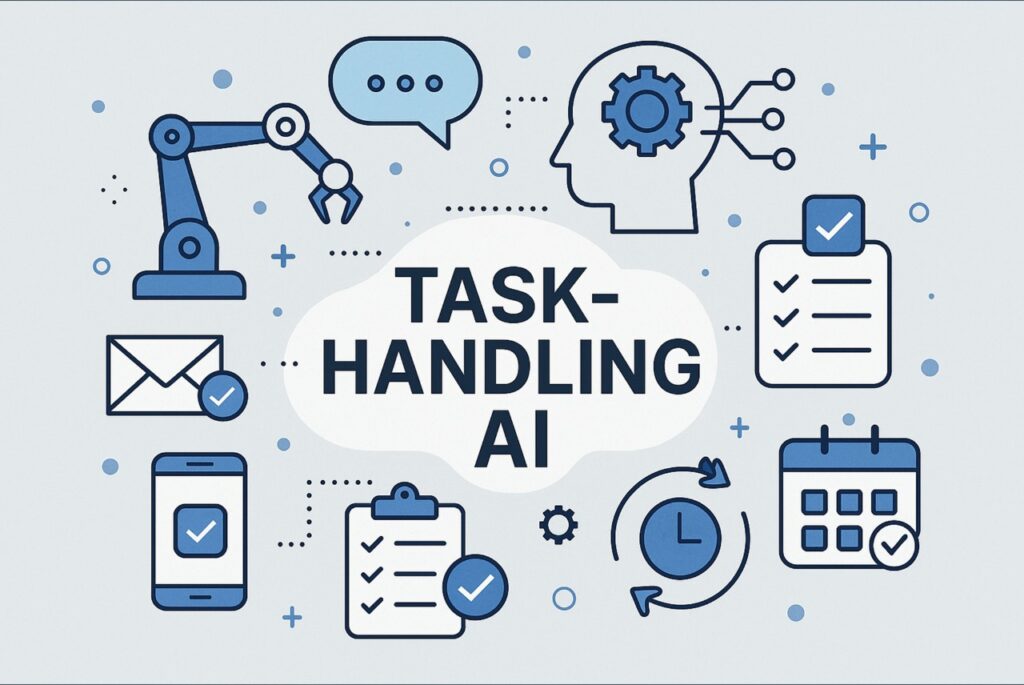
Task-Handling AI: From Booking Tickets to Filling Forms
Search is no longer just about retrieving information—it’s becoming an agent that acts.
With a project codenamed Mariner, Google is training AI to complete real-world tasks. You can ask the AI to compare hotel options, book a restaurant, or fill out a form for you. It uses contextual awareness, understands your preferences and works with services like Resy, Ticketmaster and Google Pay to complete the task—all without needing to open another app.
This evolution marks a clear step toward agentic AI—a digital assistant that doesn’t just advise, but actually does the work for you.
Personalized and Visual: A Richer, Smarter Interface
The updated Search experience is also getting more interactive and personalized. When you search for stocks, sports stats, or public data, the results now come with dynamic graphs and visual elements that can be explored in real-time.
If you opt into personalization, Google will tailor answers based on your Gmail, Calendar and Maps data. Let’s say, if you search for “good restaurants near me,” it can factor in your dietary preferences, travel schedule and past reviews.
Best part? This level of personalization is entirely optional. This means, user have fully control over their data privacy.
AI-Powered Shopping: From Discovery to Checkout
For eCommerce, Google’s updates are equally transformative. With AI Overviews, users can now compare products more intelligently, get virtual try-ons and even see AI-generated summaries of reviews.
Once they’re ready to purchase, Google Pay integration allows users to check out directly from the search interface. Google is also experimenting with showing sponsored listings within AI Mode—creating new opportunities for advertisers and brands to reach consumers without disrupting the experience.

The Technology Behind It: Meet Gemini 2.5
All of this is made possible by Gemini 2.5—Google’s most capable model suite to date. There are two main variants:
- Gemini 2.5 Flash: Designed for fast, lightweight tasks like autocomplete and quick lookups.
- Gemini 2.5 Pro: Built for deeper tasks like long-form reasoning, multi-step planning and multi-turn conversations.
Google is using these models not just in Search, but across its entire product ecosystem—from Gmail and Docs to YouTube and Android XR (extended reality).
Beyond Search: Creative Tools for Developers and Artists
Google I/O 2025 didn’t stop at Search. The company also showcased cutting-edge creative tools:
- Veo: A generative video model capable of producing high-quality video clips with realistic motion and lighting.
- Imagen 4: A powerful image generation tool.
- Lyria: A music generation model that allows users to generate melodies, harmonies and lyrics with AI assistance.
These tools are being integrated into Google’s Vertex AI for businesses, allowing creators, developers and marketers to leverage these models in their own applications.
Final Thoughts: Google Search Becomes an Experience
The 2025 updates make it clear—Google no longer sees Search as a static list of links. It’s becoming a living, evolving experience that understands you, sees what you see and helps you act.
From handling research to booking your weekend plans, AI-powered Search is positioning itself as the ultimate digital assistant. And with Gemini 2.5 at its core, it’s only going to get smarter from here.
As we look toward the future, one thing is certain: search will never be the same again.